SERVICES MENU CLICK HERE

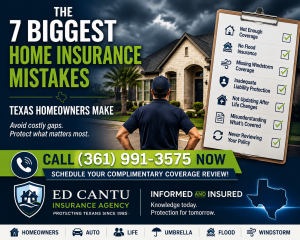
The 7 Biggest Home Insurance Mistakes Texas Homeowners Make

The 7 Biggest Home Insurance Mistakes Texas Homeowners Make

Your home may be your largest investment—but a surprising number of Texas homeowners discover too late that their insurance policy does not provide the protection they thought it did.

Insurance is not something most people think about every day. You buy a policy, pay your premium, put the paperwork away, and hope you never need it.

The problem is that many homeowners only discover gaps in their coverage after a major storm, fire, theft, or accident occurs.

The good news?

Most costly insurance mistakes can be prevented with an annual review and a better understanding of what your policy actually covers.

At Ed Cantu Insurance Agency, we believe an informed homeowner is a better-protected homeowner.

Here are seven of the most common mistakes Texas homeowners make.


Mistake #1: Choosing Insurance Based Only on Price

The cheapest policy is not always the best protection.

A lower premium may mean:

    • Lower dwelling coverage
    • Higher deductibles
    • Reduced personal property coverage
    • Missing endorsements
    • Limited liability protection

Two policies can look similar on the surface but provide very different protection when a claim happens.

A homeowners policy is not just a bill—it is a financial safety net designed to protect your home, your belongings, and your future.

Ask yourself:
“If I lost everything tomorrow, would my policy rebuild my life?”


Mistake #2: Not Having Enough Coverage to Rebuild Your Home

One of the biggest mistakes homeowners make is insuring their home based on:

    • What they paid for it
    • Their tax value
    • Their mortgage amount
    • Their current market value

Those numbers do not necessarily represent the cost to rebuild your home after a total loss.

Construction costs, labor, materials and local building requirements all affect rebuilding expenses.

The Texas Department of Insurance recommends homeowners make sure they have enough coverage to replace their home and personal property if destroyed.

A proper insurance review should consider:

    • Square footage
    • Construction quality
    • Recent improvements
    • Local rebuilding costs
    • Increased costs after widespread disasters

Mistake #3: Assuming Flood Damage Is Covered by Home Insurance

This is one of the most dangerous misconceptions in Texas.

Your homeowners policy does not cover flooding.

Flood damage caused by:

    • Rising water
    • Storm surge
    • Overflowing rivers
    • Heavy rainfall accumulation

requires a separate flood insurance policy.

Many homeowners believe:

“I don’t live in a high risk flood zone, so I don’t need flood insurance.”

Unfortunately, flooding can happen almost anywhere. The Texas Department of Insurance notes that flood insurance is separate from homeowners insurance and should be considered based on your individual risk—not just your flood zone.


Mistake #4: Not Understanding Windstorm Coverage on the Texas Coast

If you live along the Texas Gulf Coast, this mistake can be financially devastating.

Many homeowners assume:

“I have homeowners insurance, so hurricanes are covered.”

That may not be true.

Depending on where you live, windstorm and hail coverage may require separate protection through the Texas Windstorm Insurance Association (TWIA) or another provider.

Before hurricane season arrives, coastal homeowners should understand:

    • Is windstorm included?
    • Is there a separate deductible?
    • Do I need TWIA?
    • Is flood coverage included separately?

A hurricane does not create one single type of damage. Wind, storm surge, flooding, and rain intrusion can involve different insurance policies.


Mistake #5: Ignoring Liability Protection

Many homeowners focus only on protecting their house and forget one of the most important parts of their policy:

Protecting their financial future.

Your homeowners policy includes liability protection, but many families have assets exceeding their policy limits.

Potential liability situations include:

    • Someone injured on your property
    • A dog bite
    • Accidents involving family members
    • Lawsuits involving your home

A personal umbrella policy can provide additional protection above your homeowners and auto policies.


Mistake #6: Failing to Update Your Policy After Major Life Changes

Your insurance should change as your life changes.

Common situations requiring a review:

    • Home Renovations or New Additions
    • Pool installation
    • New valuables
    • Marriage
    • Divorce
    • Retirement
    • Children leaving home
    • Home-based business

A policy that was appropriate five years ago may not provide the same protection today.


Mistake #7: Never Reviewing Your Insurance Policy

The biggest mistake may be assuming:

“If I haven’t changed anything, my insurance doesn’t need to change.”

The reality is:

    • Your home value changes
    • Construction costs change
    • Insurance company guidelines change
    • Your personal assets change
    • Your risk exposure changes

A yearly insurance review is one of the easiest ways to identify coverage gaps before they become expensive problems.


Your insurance policy is a promise—but only if it provides the protection you actually need.

At Ed Cantu Insurance Agency, we believe insurance should be more than a piece of paper and a monthly payment.

Our goal is to help Texas families understand their coverage, identify potential gaps, and make informed decisions about protecting what matters most.

If you haven’t reviewed your homeowners insurance recently, we invite you to request a complimentary coverage review. Because being insured and being properly protected are not always the same thing.

Because we care

Ed Cantu

Ed Cantu Insurance and Financial Services

(361) 991-3575

www.edcantu.com

What Does Homeowners Insurance Actually Cover in Texas?

Not all policies are alike. Your policy may cover more than you think—and less than you assume.

Most Texas homeowners know they have homeowners insurance.

But ask a different question:

“Exactly what does your policy cover?”

That’s where things often get quiet.

After helping Texas families with insurance since 1985, I’ve found that many people know their premium and deductible—but aren’t nearly as familiar with the protection they’re actually buying.

And you don’t want to learn what’s missing after you have a claim.

Here are the basics every Texas homeowner should understand.

1. Your Home

The largest part of your policy is usually Dwelling Coverage.

It helps repair or rebuild your home when it’s damaged by a loss covered by your policy.

But here’s an important distinction:

Your home’s insurance value is not necessarily its real estate value.

Your land isn’t going to burn down. Insurance should focus on the cost of repairing or rebuilding the structure—not simply what you paid for the property or what Zillow says it’s worth.

Ask your agent:

“If my house had to be rebuilt today, is my coverage enough?”

With today’s construction and labor costs, that’s a question worth asking.

2. Your Other Structures

What about things that aren’t part of the house itself?

Depending on your policy, coverage may extend to detached structures such as a:

  • Detached garage
  • Storage building
  • Fence
  • Workshop
  • Other qualifying structures

If you’ve added significant improvements to your property, don’t assume your insurance automatically knows about them.

Tell your agent when your property changes.

3. Your Personal Belongings

Imagine everything inside your home disappeared tomorrow.

Furniture. Clothing. TVs. Computers. Appliances. Electronics.

How much would it cost to replace it all?

Probably more than you think.

Your homeowners policy can provide coverage for personal property damaged or stolen as a result of covered events.

But there’s an important question:

Replacement Cost or Actual Cash Value?

Suppose a covered loss destroys a television you’ve owned for several years.

Actual Cash Value generally considers depreciation.

Replacement Cost coverage can provide greater protection by helping replace covered property with comparable new property, subject to your policy’s terms and limits.

Now replace “television” with roof, and you can see why understanding these words matters.

Don’t wait until claim day to ask how your property is valued.

4. Your Financial Assets

Homeowners insurance isn’t only about your house.

Personal Liability Coverage may help protect you financially when you’re legally responsible for certain injuries to another person or damage to someone else’s property.

Imagine a serious accident occurs at your home and someone sues you.

Your house may be fine—but your financial future could be at risk.

Homeowners with substantial assets or income should also ask whether an umbrella liability policy makes sense.

5. Injuries to Guests

Many homeowners policies include Medical Payments to Others coverage.

This may help with certain medical expenses if a guest is accidentally injured on your property, subject to the terms of your policy.

It’s another small-looking part of a homeowners policy that can become very important when something unexpected happens.

6. Somewhere to Live After a Covered Disaster

Here’s a coverage people sometimes overlook until they desperately need it.

Suppose a covered fire makes your home unlivable for several months.

You still have your mortgage—but now you may also have temporary housing and other increased living expenses.

Additional Living Expense, also called Loss of Use, can help with certain additional costs while your home is being repaired after a covered loss.

Ask yourself:

If my family couldn’t live in our home tomorrow, do I know what my policy would provide?

Now for What Homeowners Insurance May NOT Cover

This is where understanding your policy becomes especially important.

A homeowners policy doesn’t cover everything that can damage your home.

And here in Texas—especially along the coast—two risks deserve special attention.

Flood

Standard homeowners insurance generally does not cover flooding.

Flood insurance is normally separate.

And being outside a high-risk flood zone doesn’t mean flooding can’t happen.

Heavy rainfall, drainage problems and major storms don’t stop at lines drawn on a flood map.

Windstorm and Hail

If you live along the Texas coast, don’t automatically assume your homeowners policy includes windstorm and hail coverage.

Depending on your location and insurance company, separate windstorm coverage may be needed.

For some Coastal Bend homeowners, protecting one house can therefore involve:

Homeowners + Windstorm/Hail + Flood

The important thing isn’t simply having three policies.

It’s making sure those policies work together without leaving an unexpected gap.

Your Policy Is a Contract—Not a Promise to Cover Everything

This may be the most important point in this article.

Homeowners insurance provides protection for covered losses, subject to the policy’s exclusions, deductibles, limits and conditions.

That’s why two policies with similar-looking prices can provide very different protection.

Don’t buy homeowners insurance based on premium alone.

A policy that’s $300 cheaper isn’t a bargain if it leaves you responsible for thousands more after a loss.

Take Ed’s 60-Second Home Insurance Test

Can you answer YES to all six?

☐ I know how much my home is insured for.

☐ I know whether my home, roof and belongings have Replacement Cost or Actual Cash Value coverage.

☐ I know my deductibles in dollars, not just percentages.

☐ I know whether windstorm and hail are covered.

☐ I know whether I have flood insurance.

☐ I know how much personal liability protection I carry.

If you couldn’t answer one or more, your policy deserves a second look.

Don’t Wait for a Claim to Find the Gap

One of the principles behind my book, Informed and Insured, is simple:

You don’t need to become an insurance expert. You just need enough information to ask the right questions and make informed decisions.

That’s where a good insurance professional should help.

At Ed Cantu Insurance & Financial Services, we’ll review your current homeowners protection and help you understand:

✓ What you’re covered for
✓ What you may not be covered for
✓ Your deductibles and limits
✓ Potential coverage gaps
✓ Windstorm and flood considerations
✓ Opportunities for better protection or potential savings

Not Sure What Your Homeowners Policy Really Covers?

Let’s find out before you need it.

📞 Call Ed Cantu Insurance & Financial Services today at (361) 991-3575

🌐 Request your Home Insurance Quote or Protection Review at EdCantuInsurance.com

No pressure. No confusing insurance jargon. Just answers.

Because we care,

Ed Cantu

Ed Cantu Insurance and Financial Services

Helping Texas families protect what matters most since 1985.

Coverage varies by insurer, policy form, endorsements, exclusions, limits and individual circumstances. This article is for general educational purposes and is not a substitute for reviewing your specific policy with a licensed insurance professional.

Texas Homeowners Insurance: Are You Really Protected?

The cheapest policy could become the most expensive decision you make.

Your home is probably one of the largest investments you’ll ever make. Yet many Texas homeowners aren’t completely sure what their insurance covers—or what it doesn’t cover.

After helping Texas families with insurance since 1985, I’ve learned one important lesson:

Saving money on insurance matters. But having the right protection when something goes wrong matters a whole lot more.

A low premium doesn’t mean much if a fire, hurricane, theft, water loss or lawsuit leaves you with a coverage gap you didn’t know existed.

Here are a few things every Texas homeowner should understand.

1. Don’t Confuse Your Home’s Value With Its Rebuilding Cost

Your house may sell for $400,000, but that doesn’t necessarily mean it should be insured for $400,000.

Insurance is primarily concerned with what it would cost to rebuild your home after a covered loss, not what a buyer would pay for your house and land.

Construction costs, labor and materials can change quickly—especially after a major Texas storm.

That’s why one of the first questions I recommend asking your agent is:

“If my home were destroyed today, do I have enough insurance to rebuild it?”

If you don’t know the answer, it’s worth finding out.

2. Know What Your Policy Actually Protects

A homeowners policy can provide much more than insurance on the house itself.

Depending on your policy, protection may include:

    • Your home – repairing or rebuilding after a covered loss
    • Other structures – such as a detached garage or storage building
    • Personal belongings – furniture, clothing, electronics and other possessions
    • Personal liability – protection if you’re legally responsible for certain injuries or property damage
    • Medical payments – certain medical expenses when a guest is injured
    • Additional living expenses – helping with increased living costs if a covered loss makes your home uninhabitable

Here’s the problem:

Having a homeowners policy doesn’t automatically mean you have enough homeowners insurance.

The limits, deductibles and exclusions matter.

3. Replacement Cost vs. Actual Cash Value Can Make a BIG Difference

This is something I want every homeowner to understand before a claim.

Actual Cash Value generally takes depreciation into account.

Replacement Cost coverage can provide considerably greater protection, subject to your policy’s terms and limits.

Think about an older television destroyed in a covered loss. Would you rather receive its depreciated value—or have coverage designed to help replace it with a comparable new one?

Now think bigger.

What if we’re talking about your roof instead of your television?

Ask your agent:

“How will my roof, home and belongings be valued if I have a claim?”

Don’t discover the answer after the damage is done.

4. Coastal Texas Homeowners Have Another Concern: Windstorm

If you live in Corpus Christi or another Texas coastal community, your homeowners policy may not cover windstorm and hail.

You may need separate windstorm coverage.

That means your protection could involve three different pieces:

Homeowners + Windstorm/Hail + Flood

Those policies need to work together.

This is one reason coastal insurance isn’t something I believe homeowners should treat as a simple online price-shopping exercise.

5. Your Homeowners Policy Usually Does NOT Cover Flooding

This surprises many homeowners.

Standard homeowners insurance generally doesn’t cover flood damage.

And don’t assume you’re safe simply because someone told you, “You’re not in a flood zone.”

Flooding can happen outside areas considered high risk.

If you live anywhere along the Texas Gulf Coast—or anywhere that can experience heavy rainfall—ask about flood insurance.

The worst time to discover you needed flood insurance is when there’s water in your house.

6. A Cheap Deductible Isn’t Everything—And Neither Is a Cheap Premium

Higher deductibles can sometimes lower your insurance premium.

That’s fine—as long as you understand how much you’ll have to pay after a loss.

Texas policies may also have different deductibles for different types of claims.

Don’t just ask:

“What’s my deductible?”

Ask:

“If I had a major claim tomorrow, exactly how much money would I have to pay out of my pocket?”

That is the number that matters.

The 7 Questions I Want You to Ask About Your Home Insurance

Take out your current policy and see whether you can answer these:

    1. Do I have enough coverage to rebuild my home today?
    2. Do I have Replacement Cost or Actual Cash Value coverage?
    3. How would my roof be covered after a claim?
    4. What are my deductibles in actual dollars?
    5. Do I have enough personal liability protection?
    6. Do I need separate windstorm or flood insurance?
    7. What important exclusions or coverage gaps are hiding in my policy?

Before You Renew, Get a Second Opinion

You don’t have to become an insurance expert.

That’s our job.

At Ed Cantu Insurance & Financial Services, we’ll review your current protection, explain it in plain English and help identify:

✓ Potential coverage gaps
✓ Possible savings
✓ Deductible concerns
✓ Windstorm and flood needs
✓ Better protection options

No pressure. No confusing insurance jargon. Just answers.

My team of professional agents and I have been helping Texas families protect their homes, vehicles and financial futures since 1985.

My philosophy is still the same one behind my book, Informed and Insured:

The more informed you are, the better decisions you can make about protecting your family.

Ask yourself, Is Your Home Properly Protected?

Don’t wait until you have a claim to find out.

Call Ed Cantu Insurance & Financial Services today at (361) 991-3575 or request a Home Insurance Quote/Protection Review at EdCantuInsurance.com.

Let us help you find the right protection at a price you can afford.

Because We Care,

Ed Cantu

Ed Cantu Insurance & Financial Services —

Helping Texas families protect what matters most since 1985.

Coverage varies by insurance company, policy form, endorsements, exclusions, limits and individual circumstances. This article is for general educational purposes. Please review your individual coverage with a licensed insurance professional.