
SERVICES MENU CLICK HERE

Texas Homeowners Insurance: Are You Really Protected?

The cheapest policy could become the most expensive decision you make.

Your home is probably one of the largest investments you’ll ever make. Yet many Texas homeowners aren’t completely sure what their insurance covers—or what it doesn’t cover.

After helping Texas families with insurance since 1985, I’ve learned one important lesson:

Saving money on insurance matters. But having the right protection when something goes wrong matters a whole lot more.

A low premium doesn’t mean much if a fire, hurricane, theft, water loss or lawsuit leaves you with a coverage gap you didn’t know existed.

Here are a few things every Texas homeowner should understand.

1. Don’t Confuse Your Home’s Value With Its Rebuilding Cost

Your house may sell for $400,000, but that doesn’t necessarily mean it should be insured for $400,000.

Insurance is primarily concerned with what it would cost to rebuild your home after a covered loss, not what a buyer would pay for your house and land.

Construction costs, labor and materials can change quickly—especially after a major Texas storm.

That’s why one of the first questions I recommend asking your agent is:

“If my home were destroyed today, do I have enough insurance to rebuild it?”

If you don’t know the answer, it’s worth finding out.

2. Know What Your Policy Actually Protects

A homeowners policy can provide much more than insurance on the house itself.

Depending on your policy, protection may include:

    • Your home – repairing or rebuilding after a covered loss
    • Other structures – such as a detached garage or storage building
    • Personal belongings – furniture, clothing, electronics and other possessions
    • Personal liability – protection if you’re legally responsible for certain injuries or property damage
    • Medical payments – certain medical expenses when a guest is injured
    • Additional living expenses – helping with increased living costs if a covered loss makes your home uninhabitable

Here’s the problem:

Having a homeowners policy doesn’t automatically mean you have enough homeowners insurance.

The limits, deductibles and exclusions matter.

3. Replacement Cost vs. Actual Cash Value Can Make a BIG Difference

This is something I want every homeowner to understand before a claim.

Actual Cash Value generally takes depreciation into account.

Replacement Cost coverage can provide considerably greater protection, subject to your policy’s terms and limits.

Think about an older television destroyed in a covered loss. Would you rather receive its depreciated value—or have coverage designed to help replace it with a comparable new one?

Now think bigger.

What if we’re talking about your roof instead of your television?

Ask your agent:

“How will my roof, home and belongings be valued if I have a claim?”

Don’t discover the answer after the damage is done.

4. Coastal Texas Homeowners Have Another Concern: Windstorm

If you live in Corpus Christi or another Texas coastal community, your homeowners policy may not cover windstorm and hail.

You may need separate windstorm coverage.

That means your protection could involve three different pieces:

Homeowners + Windstorm/Hail + Flood

Those policies need to work together.

This is one reason coastal insurance isn’t something I believe homeowners should treat as a simple online price-shopping exercise.

5. Your Homeowners Policy Usually Does NOT Cover Flooding

This surprises many homeowners.

Standard homeowners insurance generally doesn’t cover flood damage.

And don’t assume you’re safe simply because someone told you, “You’re not in a flood zone.”

Flooding can happen outside areas considered high risk.

If you live anywhere along the Texas Gulf Coast—or anywhere that can experience heavy rainfall—ask about flood insurance.

The worst time to discover you needed flood insurance is when there’s water in your house.

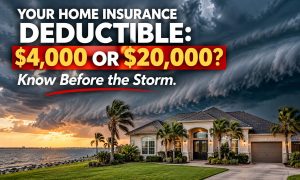
6. A Cheap Deductible Isn’t Everything—And Neither Is a Cheap Premium

Higher deductibles can sometimes lower your insurance premium.

That’s fine—as long as you understand how much you’ll have to pay after a loss.

Texas policies may also have different deductibles for different types of claims.

Don’t just ask:

“What’s my deductible?”

Ask:

“If I had a major claim tomorrow, exactly how much money would I have to pay out of my pocket?”

That is the number that matters.

The 7 Questions I Want You to Ask About Your Home Insurance

Take out your current policy and see whether you can answer these:

    1. Do I have enough coverage to rebuild my home today?
    2. Do I have Replacement Cost or Actual Cash Value coverage?
    3. How would my roof be covered after a claim?
    4. What are my deductibles in actual dollars?
    5. Do I have enough personal liability protection?
    6. Do I need separate windstorm or flood insurance?
    7. What important exclusions or coverage gaps are hiding in my policy?

Before You Renew, Get a Second Opinion

You don’t have to become an insurance expert.

That’s our job.

At Ed Cantu Insurance & Financial Services, we’ll review your current protection, explain it in plain English and help identify:

✓ Potential coverage gaps
✓ Possible savings
✓ Deductible concerns
✓ Windstorm and flood needs
✓ Better protection options

No pressure. No confusing insurance jargon. Just answers.

My team of professional agents and I have been helping Texas families protect their homes, vehicles and financial futures since 1985.

My philosophy is still the same one behind my book, Informed and Insured:

The more informed you are, the better decisions you can make about protecting your family.

Ask yourself, Is Your Home Properly Protected?

Don’t wait until you have a claim to find out.

Call Ed Cantu Insurance & Financial Services today at (361) 991-3575 or request a Home Insurance Quote/Protection Review at EdCantuInsurance.com.

Let us help you find the right protection at a price you can afford.

Because We Care,

Ed Cantu

Ed Cantu Insurance & Financial Services —

Helping Texas families protect what matters most since 1985.

Coverage varies by insurance company, policy form, endorsements, exclusions, limits and individual circumstances. This article is for general educational purposes. Please review your individual coverage with a licensed insurance professional.

Hurricane Celia: 56 Years Later, Its Warning Still Matters

On August 3, 1970, Hurricane Celia slammed into the Coastal Bend and left a path of extraordinary destruction across Corpus Christi and surrounding communities.

Although the Great Storm of 1919 remains the deadliest hurricane in Corpus Christi history, Celia may have been our most destructive storm in terms of property damage when measured in today’s dollars. Thousands of homes were destroyed, tens of thousands more were damaged, and many Coastal Bend families saw their lives changed in a matter of minutes.

Fifty-six years later, I still remember the incredible destruction Hurricane Celia left behind. Growing up just four blocks west of Parkdale Plaza, the images of the Woolco Department Store—with its front wall torn away and portions of the roof collapsed—left a lasting impression on me. Those scenes are a reminder that hurricanes aren’t just historical events; they’re life-changing experiences for the families in their path and Celia’s warning remains clear: It only takes one storm.

Forecasters are predicting fewer storms than average during the 2026 Atlantic hurricane season. But a quieter forecast is not a guarantee of safety. One hurricane striking the Texas coast can cause catastrophic property damage and lasting financial hardship for you and your family.

August and September are historically the most active—and most dangerous—months of hurricane season for the Texas coast. If you have not already prepared, the time to act is now—not when a storm enters the Gulf.

Preparation includes reviewing your evacuation plan and emergency supplies. It should also include a complete review of your homeowners, windstorm and flood insurance policies. Make sure you understand your deductibles, coverage limits and exclusions before a hurricane threatens. Once a storm is approaching, it may be too late to purchase or change coverage.

Let the anniversary of Hurricane Celia serve as your reminder:

Prepare now. Review your coverage. Protect what matters most.

Call 361-991-3573 or visit EdCantuInsurance.com today to request your hurricane and flood insurance review.

Because we Care!

Ed Cantu

Tropical Storm Bertha Threatens Heavy Rain and Flooding Along the Gulf Coast

July 2026

As Tropical Storm Bertha moves westward across the Gulf, residents from Louisiana to the Texas Coast should prepare for the possibility of heavy rainfall, flash flooding, gusty thunderstorms, and dangerous marine conditions.

Forecasters expect the storm to strengthen somewhat while it remains over the warm Gulf waters. Although Bertha is forecast to make its initial landfall in Louisiana, weather systems of this nature often produce flooding well away from the center of the storm. Depending on its track after landfall, parts of Southeast and Upper Texas could also experience periods of heavy rain and localized flooding.

Flooding Is Often the Greatest Threat
While high winds often receive the most attention, flooding is historically the leading cause of storm-related property damage. Even tropical storms can produce several inches of rainfall in a short period, overwhelming streets, drainage systems, creeks, and low-lying areas.

Remember:
• Never drive through flooded roadways.
• Just 12 inches of moving water can carry away many vehicles.
• Follow the National Weather Service’s life-saving reminder:

“Turn Around, Don’t Drown®. “Monitor forecasts from the National Hurricane Center and your local National Weather Service office for updated watches, warnings, and evacuation information.

Is It Too Late to Buy Flood Insurance?
Unfortunately, yes—for this storm.

Most National Flood Insurance Program (NFIP) policies include a 30-day waiting period before coverage becomes effective. Some of our private flood insurance policies offer shorter waiting periods, but once a storm is approaching or imminent, new flood insurance generally cannot be purchased to cover that specific event.

This is why flood insurance should be purchased before hurricane season or before severe weather threatens your area.

Will Your Homeowners Insurance Cover Flood Damage?
One of the biggest misconceptions among homeowners is believing that their homeowners insurance covers flooding.

It typically does not.

Damage caused by rising water, overflowing rivers, storm surge, or flash flooding generally requires a separate flood insurance policy.
Whether you live on the coast, near a creek, or in an area that has experienced heavy rainfall, flood insurance may be worth considering. In fact, many flood claims occur outside of FEMA-designated high-risk flood zones.

Be Prepared for the Next Storm
While it may be too late to obtain flood insurance for Tropical Storm Bertha, there will inevitably be future storms. Taking time now to review your insurance coverage can help protect your home, belongings, and financial future before the next weather event develops.
If you have questions about flood insurance, homeowners insurance, windstorm coverage, or hurricane preparedness, our team is happy to help.

Ed Cantu
Ed Cantu Insurance Agency
Protecting Texas Families Since 1985
📞 Corpus Christi: (361) 991-1493
📞 Rio Grande Valley: (956) 359-4000
🌐 EdCantuInsurance.com